
Professional cat grooming can mean a nail trim, a bath and brush, a sanitary trim, or a full haircut. There is no single national price: the service, coat length, matting, cat temperament, location, and salon all change the quote. For a current published example, Petco lists estimated cat prices of $70 for a short-haired bath, $80 for a long-haired bath, $90 for a short-haired bath and cut, and $100 for a long-haired bath and cut, with local pricing and availability determining the final amount. Here is how to compare services without mistaking one company’s estimate for a universal rate.
Do Cats Need Professional Grooming?
Many healthy short-haired cats can handle most coat care at home, but professional grooming is useful when a cat has a long or dense coat, mats, overgrown nails, trouble grooming because of age or mobility, or a coat that needs a haircut. The ASPCA’s cat-grooming guidance recommends regular inspection of fur, skin, ears, paws, nails, eyes, and teeth, and advises using a professional or veterinarian when a cat becomes difficult to groom safely.
Professional grooming is not a substitute for veterinary care. Persistent scratching, bald patches, redness, swelling, discharge, painful mats, or other changes should be discussed with a veterinarian rather than treated as a routine salon problem.
What Is Included in a Cat Grooming Session?
The service name matters more than the phrase “cat grooming.” Ask what is included before you book.
- Nail trim: Clipping or grinding the nails. This is usually a short standalone service.
- Bath and brush: Bathing, drying, brushing, and often nail trimming or ear cleaning. Petco’s published bath service includes ear cleaning, blow-drying, a 15-minute brushout, and a nail trim.
- Bath and haircut: A bath, drying, brushing, haircut, and basic nail and ear care. Petco lists a bath-and-haircut service with a cut and style, shampoo, ear cleaning, blow-dry, brushout, and nail trim.
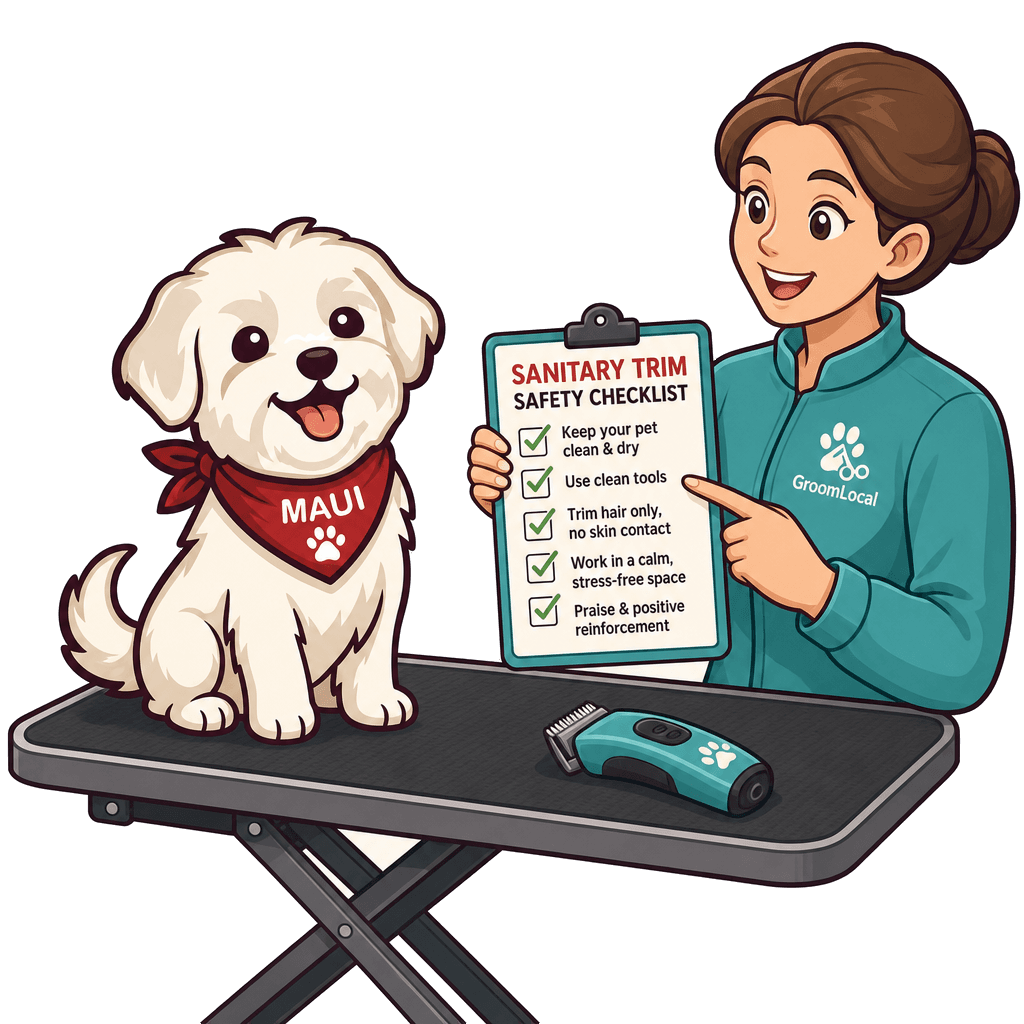
- Sanitary trim: Shortening fur around the rear and other hygiene areas. It may be an add-on rather than a complete service.
- Dematting or deshedding: Extra coat work for loose undercoat or tangles. Severe mats may require shaving rather than brushing them out.
- Waterless grooming: A lower-water option some salons offer when a cat cannot tolerate a full bath.
PetSmart’s grooming FAQ explains its booking and health requirements. Confirm cat-service availability, the exact package, and the estimate with your chosen location instead of assuming that every salon offers the same services.
How Much Does Cat Grooming Cost?
Cat grooming prices are service-specific, not a dependable national average. The following provider examples were checked September 7, 2026. They are not a market survey:
| Published example | What it covers | Listed price |
|---|---|---|
| Petco short-hair bath | Bath service estimate | $70 |
| Petco long-hair bath | Bath service estimate | $80 |
| Petco short-hair bath and cut | Bath and haircut estimate | $90 |
| Petco long-hair bath and cut | Bath and haircut estimate | $100 |
| Petco spa or deshed package | Add-on to a bath or bath-and-haircut service | +$26 |
These examples are not quotes for every city or every provider. Petco says its prices vary by local market, cat age, hair length, and selected service, and that the local salon provides the definitive quote. PetSmart likewise requires a location and pet details to show an estimate. Independent salons may price by coat condition, time, weight, temperament, or the exact haircut rather than using the same categories.
A quote can increase when the cat is severely matted, needs substantial coat removal, cannot tolerate handling, requires a longer appointment, or needs a service that is not included in a basic bath package. Ask whether nail trimming, ear cleaning, drying, sanitary trimming, dematting, and handling fees are included.
Why Does a Cat Groom Cost More Than a Nail Trim?
A nail trim is a brief maintenance service. A full groom can involve bathing, drying, brushing, coat removal, haircutting, nail care, cleaning, and careful handling around a fast-moving animal with sharp claws. The price difference reflects time, equipment, products, training, and the cat’s coat and behavior. Comparing a nail-trim price with a full-groom quote is not useful; they are different services.
Cat Grooming Is Different From Dog Grooming
Cats need a groomer who understands feline handling, not simply a dog groomer who accepts cats. Cats can become distressed quickly around dryers, clippers, unfamiliar restraint, and other animals. A cat-friendly provider should explain how they pause, modify, or stop a service if the cat is too stressed or unsafe to continue.
When interviewing a provider, ask:
- How often do you groom cats, and which services do you offer?
- Is the cat groomed separately from dogs, or during a quieter appointment block?
- What happens if my cat will not tolerate a bath, dryer, or haircut?
- How do you price matting, extra handling, or a second visit?
- Do you require current vaccines or a veterinary clearance?
- Can you provide an itemized estimate before starting?
The National Cat Groomers Institute is one source for feline-grooming education and certification information. Treat a credential as one screening signal, not a guarantee of a particular outcome.
Breed and Coat Considerations
Coat type changes the work involved, but it does not create one fixed schedule for every cat in a breed.
- Persians and other long-haired cats: Dense coats can mat around the armpits, belly, neck, and behind the ears. Regular combing at home and a shorter professional schedule may help prevent a larger shave later.
- Maine Coons and other dense-coated cats: Ask how the provider handles undercoat, shedding, and mats close to the skin. “Deshedding” should be defined in the quote rather than assumed to mean a haircut.
- Ragdolls and medium-haired cats: A silky coat may still tangle in friction areas. Check the belly, legs, collar area, and tail regularly.
- Short-haired cats: Many need only routine brushing and occasional nail care, but a professional can help when the cat cannot be handled safely at home.
- Sphynx and other hairless cats: Skin and ear care are different from coat trimming. Ask your veterinarian about recurring skin concerns and use a groomer experienced with hairless cats.
Do not shave a double-coated cat simply because summer is approaching without discussing the coat and the reason with a qualified professional. The correct service depends on the individual cat, not a seasonal slogan.
How Often Should a Cat Be Groomed?
There is no universal appointment interval. The ASPCA says most cats benefit from brushing once or twice per week, while indoor long-haired cats may need grooming every few days. A professional appointment may be occasional for a short-haired cat and more regular for a long-haired, senior, mobility-limited, or mat-prone cat.
Use the coat and the cat’s comfort as your guide. Schedule sooner if mats recur, nails overgrow, the cat cannot keep the rear clean, or home handling is no longer safe. A veterinarian should guide grooming frequency when skin disease, pain, obesity, or mobility problems are involved.
Signs It Is Time to Call a Professional
Book an assessment when you see persistent tangles, mats, nails curling toward the paw pads, fur soiled around the rear, or a cat that cannot be brushed safely. Do not cut mats out with household scissors; mats sit close to delicate skin and are easy to turn into an injury.
Call a veterinarian for skin redness, wounds, bald patches, swelling, discharge, repeated ear scratching, or ongoing hairballs. A groomer can identify something unusual, but cannot diagnose or prescribe treatment.
How to Prepare Your Cat
Preparation should lower stress, not force the cat through a full groom at home.
- Leave the carrier open in the home and reward voluntary exploration.
- Practice brief, calm touches to paws, ears, and the coat. Stop before the cat escalates.
- Brush only as much as the cat tolerates. Do not chase a cat around the house with a comb.
- Tell the groomer about bites, scratches, panic, medications, mobility limits, prior matting, and veterinary concerns.
- Ask whether the cat should eat normally before the appointment and what records the salon requires.
- Bring a familiar blanket if the provider allows it.
A first visit can be an assessment, nail trim, or partial groom rather than a complete haircut. The best result is a safe, repeatable experience, not a box checked at any cost.
What About Sedation?
Do not give a cat a sedative or human medication for grooming. If your cat cannot be groomed safely while awake, discuss options with a veterinarian before the appointment. A groomer and veterinarian may need to coordinate for a cat with severe fear, pain, medical problems, or extensive matting.
Never treat a groomer’s suggestion as a prescription. Medication choice, dose, timing, and monitoring belong to a veterinary professional.
Finding a Cat Groomer Near You
Use GroomLocal’s cat-grooming directory to build a shortlist, then verify the provider’s current services, service area, availability, and price directly. Listings are not a guarantee that every provider offers confirmed pricing, feline certification, or instant booking. For help comparing handling, supervision, and communication, adapt the questions in our groomer selection guide to feline care. If your cat already has tight mats or painful skin, describe that before booking rather than requesting a routine bath. For a quote request, use Get Quotes and include your cat’s coat length, approximate age, requested service, matting, and handling concerns.
Frequently Asked Questions
How much does it cost to groom a cat?
Published examples vary by provider and service. Petco currently lists estimated prices of $70 to $100 for short- and long-haired bath or bath-and-cut services, before optional packages. That is a provider-specific estimate, not a national average; ask the local salon for a current quote.
How much does a haircut for a cat cost?
A cat haircut is usually priced as part of a bath-and-haircut or full-groom service. The quote depends on coat length, matting, haircut, location, and handling needs. Ask whether bathing, drying, nail trimming, ear cleaning, and dematting are included.
Do all Petco and PetSmart locations groom cats?
No. Both companies describe cat grooming as dependent on participating locations and trained or certified staff. Check the local salon before assuming the service is available or that a listed price applies.
How often should indoor cats be groomed?
It depends on coat, age, health, and the cat’s ability to groom itself. The ASPCA recommends brushing most cats once or twice per week and notes that indoor long-haired cats may need brushing every few days. Professional visits are more useful when home maintenance is not enough or cannot be done safely.
Is it safe to groom a matted cat at home?
Do not use scissors to cut close mats yourself. Severe matting can pull on the skin and may require a professional groomer or veterinarian. If the skin is painful, inflamed, wounded, or infected, seek veterinary care.
Can a groomer sedate my cat?
A groomer should not prescribe or administer sedatives independently. If sedation or medication may be necessary, speak with your veterinarian first so the cat can be evaluated and monitored appropriately.
Is professional cat grooming worth it?
It can be worthwhile when a cat’s coat, nails, age, mobility, or temperament makes home care difficult or unsafe. For a cat that is healthy, short-haired, and comfortable with routine brushing, professional grooming may be occasional maintenance rather than a regular full groom.
Sarah Clarke
Professional groomer and salon owner in Lakewood, WA with over 15 years of experience grooming dogs and cats of all breeds. Sarah learned the craft from her mother and carries on a family legacy of compassionate pet care.