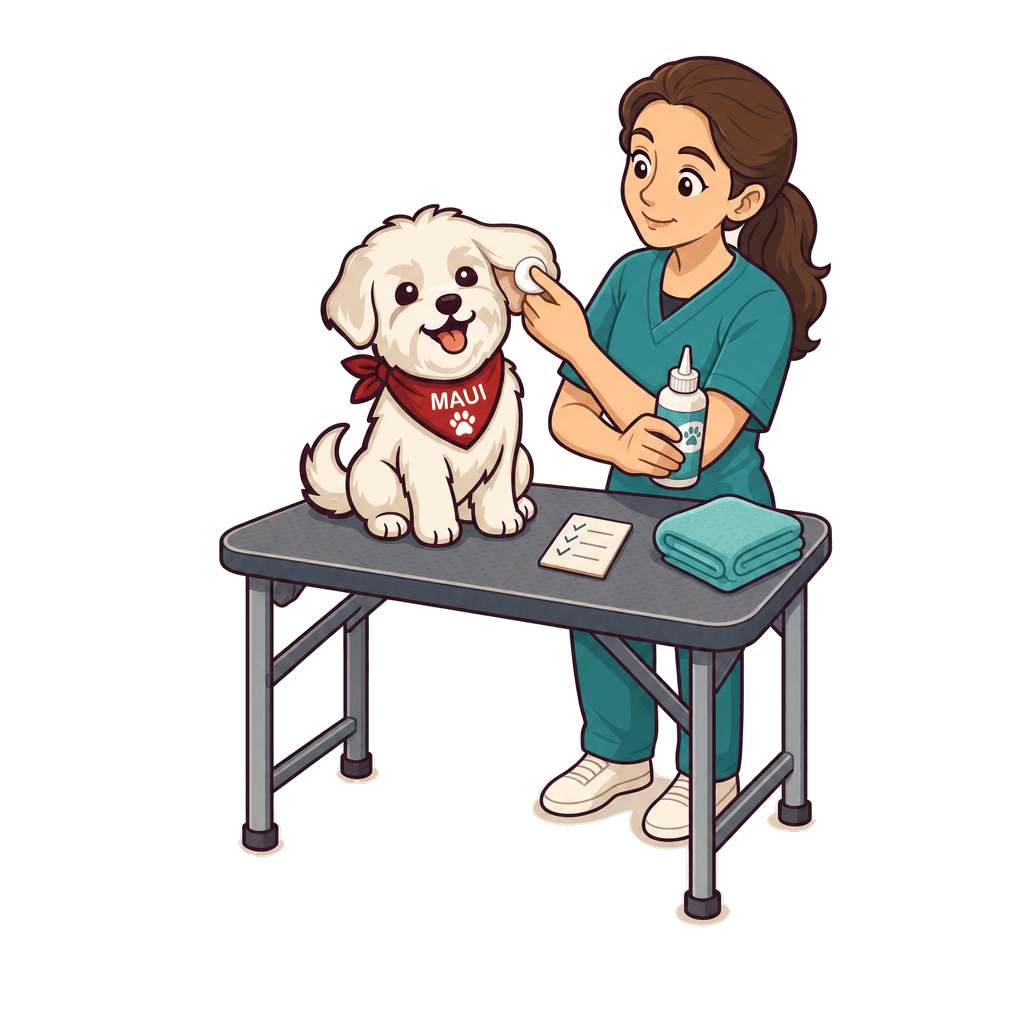
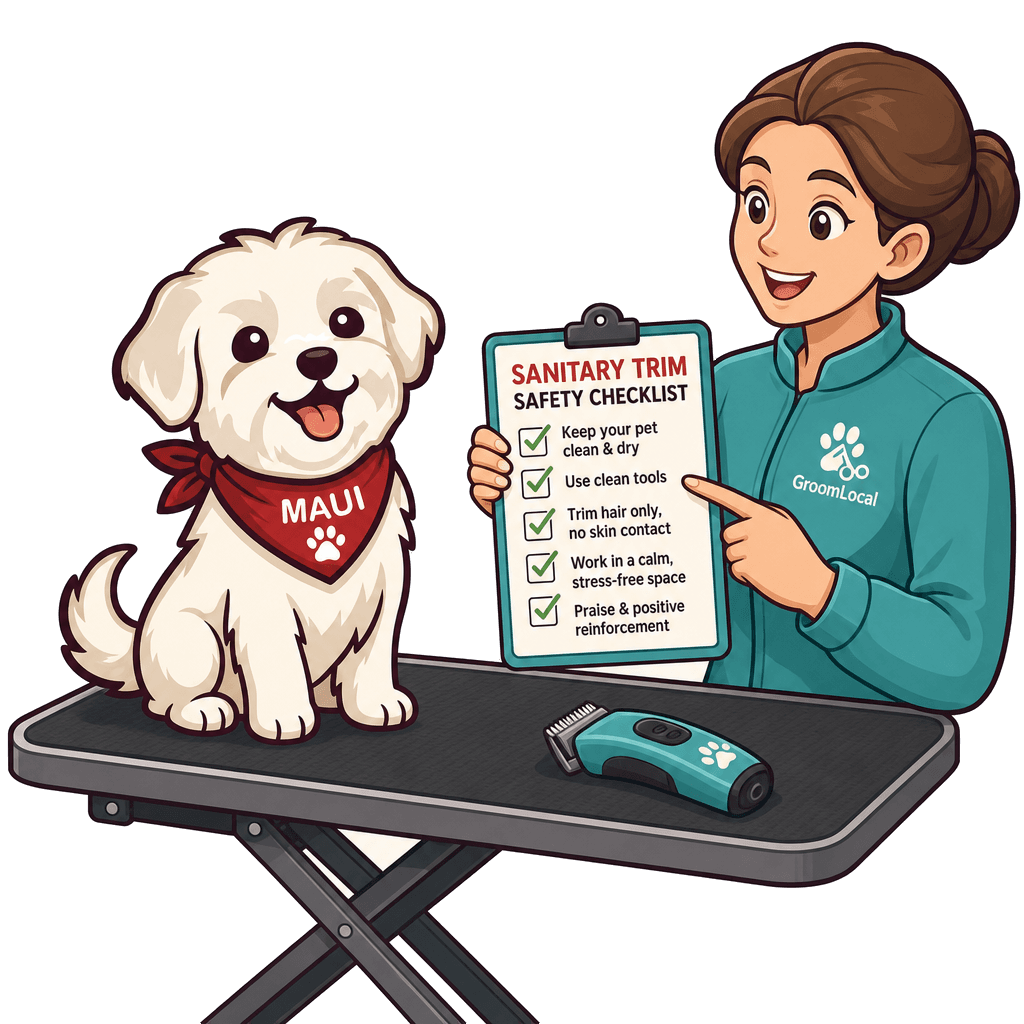
A dog sanitary trim is a focused tidy-up around areas that can collect urine, feces, moisture, or tangles—not a full haircut. It commonly means carefully shortening hair around the rear, genital area, lower belly, and sometimes inner thighs. Whether your dog needs one depends on coat, hygiene, comfort, and how much hair is actually causing a problem.
What a sanitary trim usually includes
The exact outline varies by coat and provider, but a sanitary trim may include a conservative tidy around the anus, the fur in front of the penis or around the vulva, and a small amount of lower-belly or inner-thigh hair. The goal is a cleanable, manageable area—not a one-size-fits-all bare shave. Ask the groomer to describe the area and length before the appointment.
Does every dog need one?
No. Some short-coated dogs stay clean without one. Longer, curly, or easily matted coats may benefit when hair traps moisture or debris. Coat type, toileting habits, age, mobility, and home brushing all matter.
Sanitary trim versus a full groom
A sanitary trim is a limited service. It may be an add-on, mini groom, or part of a bath-and-brush or full haircut, but listings use different names. Confirm bathing, drying, brushing, nails, ears, face, feet, and the sanitary area. GroomLocal’s grooming-cost guide explains why a starting price is not a guaranteed quote.
When to choose a professional
Sensitive anatomy, a wiggly dog, dense mats, limited mobility, or guarding can make this a poor DIY project. Ask about tool or guard length, breaks, supervision, and what happens if the service must be shortened.
Safety boundaries: grooming is not veterinary care
Do not use a trim to diagnose or treat red, swollen, painful, bleeding, or draining skin. The ASPCA grooming guidance advises veterinary attention for abnormal skin or hair changes. Chewy’s veterinary Q&A notes that discharge can need veterinary evaluation. PetEdge’s technique overview provides grooming context, not medical advice.
Questions to ask before booking
Ask what the trim includes, how much hair remains, whether it is in the estimate, how nervous dogs are handled, and what would make the groomer stop and call you. If the dog has redness, discharge, persistent odor, or pain, contact a veterinarian instead of asking a groomer to hide the symptom.
Bottom line
A sanitary trim can help some dogs, but it is not mandatory for every coat and never substitutes for veterinary care. Get the scope, price, handling plan, and stop conditions in writing; then compare local options through GroomLocal and confirm final details directly.
Alicia Clarke
Contributing writer at GroomLocal. Alicia covers pet wellness topics and writes practical guides for first-time pet owners.